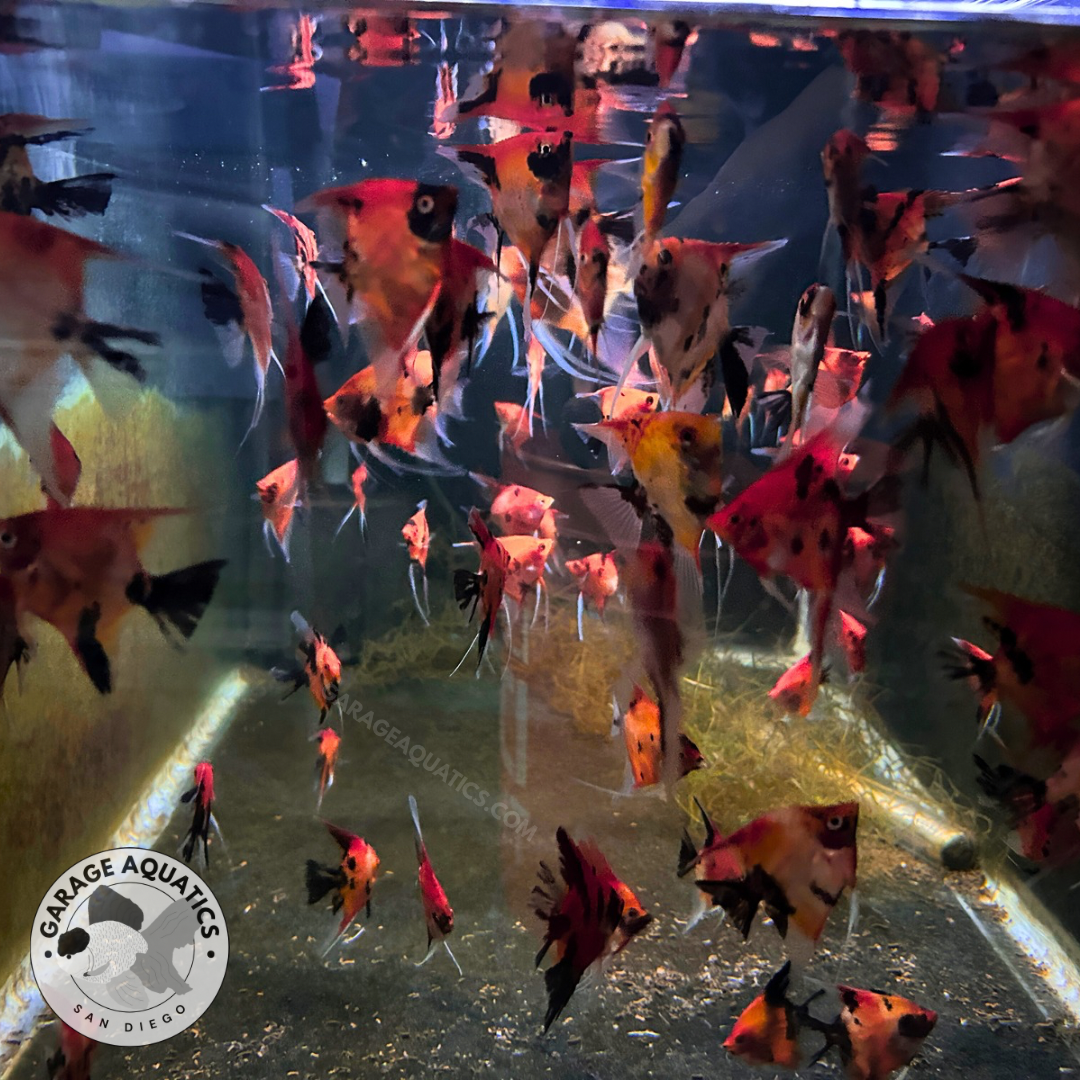
Red Devil Angelfish are prized for their deep, solid red coloration. When they arrive from professional fish farms, they often display intense, pitch-red color. Many hobbyists notice that this color fades over time at home and wonder how to maintain it — or whether red color is always a good sign.
At Garage Aquatics, we believe it’s important to understand the difference between healthy coloration and redness caused by stress or illness. This guide explains how Red Devil Angelfish develop their color, how to maintain it properly, and how to recognize when redness is a warning sign.
Why Red Devil Angelfish Are So Red at the Farm
When Red Devil Angelfish arrive at our store, they are fully saturated with deep red coloration. This is not the result of dyes or artificial treatments. Instead, it comes from consistent nutrition, controlled environments, and low-stress conditions.
Dietary Pigments and Natural Color Development
Fish farms feed their angelfish diets rich in carotenoids — natural pigments responsible for red, orange, and yellow coloration. One of the most important pigments is astaxanthin, which provides the building blocks for strong red coloration.
These pigments are naturally found in foods such as:
-
Spirulina
-
Krill
-
Shrimp and other crustaceans
-
High-quality color-enhancing pellets
Just like flamingos turn pink from eating shrimp, Red Devil Angelfish develop their vibrant red color from carotenoid-rich diets.
How to Increase Red Color in Red Devil Angelfish at Home
Maintaining that farm-fresh red coloration at home requires a balance of proper feeding, water quality, and stress management.
Feed Color-Enhancing Foods in Moderation
Choose high-quality foods designed to support natural coloration. A well-rounded diet can include:
-
Color-enhancing pellets as a staple food
-
Frozen krill, brine shrimp, or mysis shrimp
-
Spirulina flakes a few times per week
Overfeeding should be avoided, as excess food quickly degrades water quality and causes stress, which leads to color loss.
Maintain Excellent Water Quality
Even the best diet cannot compensate for poor water conditions. Clean, stable water is essential for both color and overall health.
Recommended parameters for Red Devil Angelfish:
-
Ammonia: 0 ppm
-
Nitrite: 0 ppm
-
Nitrate: below 20 ppm
-
pH: 6.5–7.2
-
Temperature: 78–82°F
Poor water quality leads to stress, weakened immune systems, and fading coloration.
Healthy Red Color vs Unhealthy Redness
Not all redness is a sign of good health. It’s critical to recognize the difference.
Healthy Red Coloration
Healthy coloration appears as:
-
Even, solid red across the body
-
Bright color paired with active behavior
-
Normal appetite and open, relaxed fins
This type of color comes from proper genetics, nutrition, stable water conditions, and low stress.
Unhealthy Redness Caused by Illness or Stress
Redness caused by stress or disease often appears uneven or patchy and is usually accompanied by changes in behavior.
Poor Water Quality
Elevated ammonia, nitrite, or nitrate levels can cause red, inflamed gills or blotchy red areas on the body. This happens when stress increases blood flow to the skin and gills, creating inflammation rather than healthy coloration.
Bacterial Infections
Red streaks, sores, or decaying fins may indicate bacterial infections such as septicemia or fin rot.
Common symptoms include:
-
Red streaking in fins
-
Bloody or inflamed patches
-
Clamped fins
-
Lethargy or loss of appetite
Treatment should only begin after water quality has been corrected. In some cases, antibacterial medications such as Kanaplex or Melafix may be appropriate, along with isolation in a hospital tank.
Stress or Physical Injury
Stress from aggressive tank mates, new tank setups, poor acclimation, or rough handling can also cause temporary redness. Once stressors are removed and conditions improve, this redness often fades on its own.
What To Do If Your Angelfish Looks Unnaturally Red
If your fish appears excessively red or shows signs of stress, follow these steps:
-
Test your water for ammonia, nitrite, nitrate, and pH
-
Perform partial water changes and clean the substrate
-
Observe behavior for signs of stress or aggression
-
Treat with medication only if symptoms persist after water quality is stabilized
Final Thoughts
Strong red coloration in Red Devil Angelfish is the result of good genetics, proper nutrition, clean water, and a low-stress environment. There are no shortcuts that replace good husbandry.
At Garage Aquatics, we focus on long-term fish health and natural coloration rather than artificial enhancements. A truly red angelfish is a healthy angelfish.
Share:
The Rare and Special Leopard Angelfish: A Must-Have for Aquatic Enthusiasts