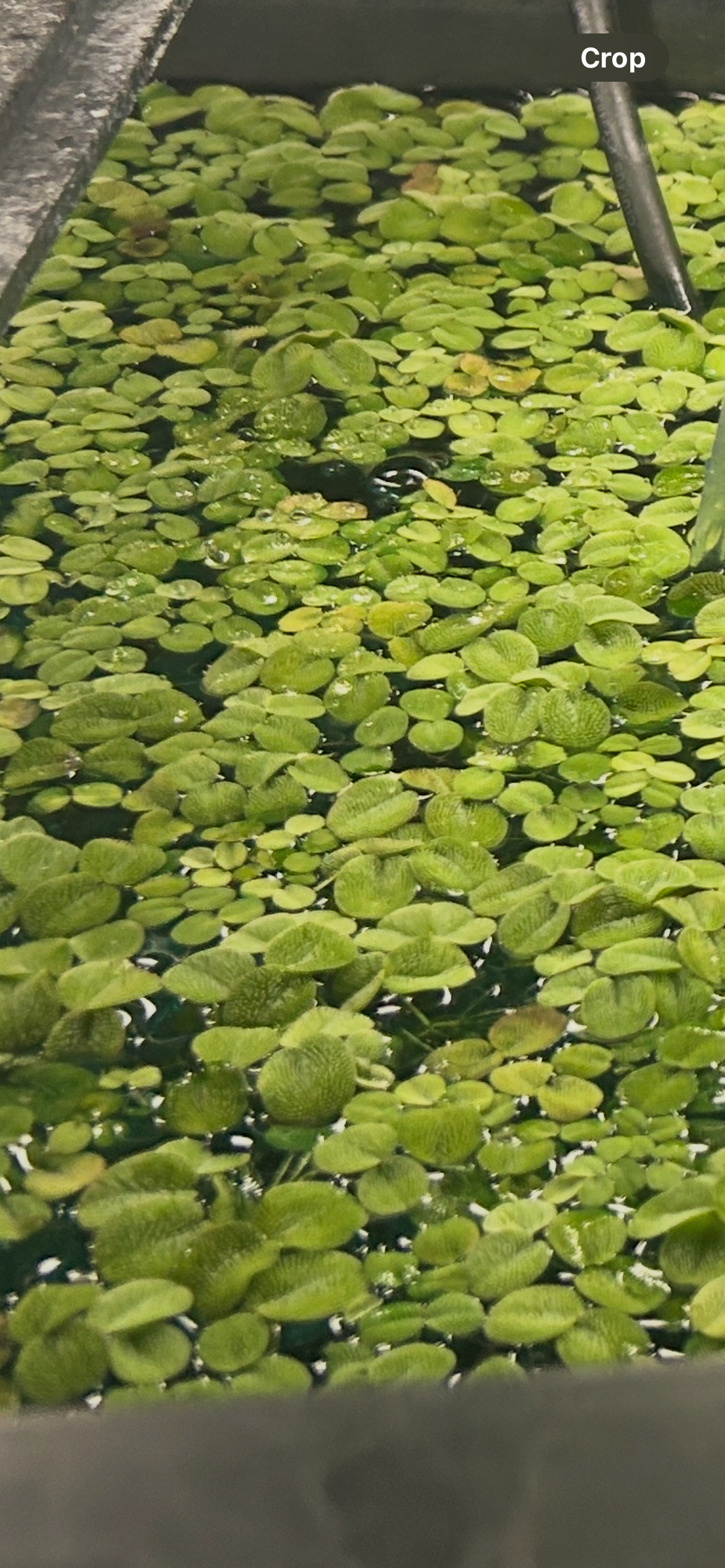
Floating plants are one of the easiest ways to improve a fish tank. They soak up extra nutrients, shade the water, and give fish places to hide. Some of the best ones, like Water Spangles, are simple to grow and great for beginners.
Why Add Floating Plants?
- Reduce nitrates: They absorb nutrients that fuel algae.
- Provide shade: Many fish like dimmer light, including bettas and angelfish.
- Give cover: Roots and leaves make hiding places and help shy fish feel safe.
- Look natural: They add green to the top of the tank.
- Easy care: They do not need to be planted in the substrate.
Water Spangles (Salvinia minima)
Water Spangles are small floating plants with fuzzy green leaves. Their long roots hang in the water and give fish a soft place to explore. They grow quickly under bright light.
Best for: bettas, angelfish, community tanks, and shaded tanks.
Care tips:
- Give them moderate to bright light.
- Keep the top of the leaves dry. Do not let a lid drip on them.
- Remove extra plants when they cover the whole surface.
- Aim for 50 to 70 percent coverage at most so fish can still reach the surface.
Floating Plants for Betta Tanks
Bettas love resting under leaves close to the surface. A small group of floating plants gives them comfort and cover. Keep some open water so your betta can breathe at the surface. See our betta fish care guide.
Floating Plants for Angelfish Tanks
Angelfish like dim, calm tanks. Floating plants help soften the light and give them cover. See our angelfish care guide.
What About Goldfish?
Goldfish like to eat plants. Floating plants may be nibbled or pulled apart. If you want plants in a goldfish tank, try tougher ones like anubias and java fern attached to decor.
How to Add Floating Plants to Your Tank
- Rinse the plants gently in dechlorinated water.
- Quarantine new plants for a week or more if you can. This helps avoid pests and snails.
- Place them on the surface.
- Give them time to settle. Some leaves may melt at first and then regrow.
Common Problems
- Yellow or melting leaves: Usually low light, low nutrients, or wet leaves from condensation.
- Plants take over the tank: Remove extras weekly. You can compost them or share them.
- Roots tangle with filter: Keep plants away from the filter outflow.
Frequently Asked Questions
Do floating plants need fertilizer?
Usually not. Fish waste gives them enough nutrients in most tanks.
Do floating plants block light for other plants?
Yes, if they cover too much of the surface. Thin them out regularly.
Can floating plants help with algae?
Yes. They absorb nutrients and shade the water, which helps limit algae.
Are floating plants safe for fish?
Yes. Just keep some open water at the surface for oxygen.
Where to Buy
Garage Aquatics ships live aquatic plants from San Diego, CA. Browse our plant collection.
Share:
Ich (White Spot Disease) in Fish: Signs and Treatment
How to Do a Water Change Without Stressing Fish