Angelfish are one of the most popular freshwater fish for good reason. They are graceful, easy to feed, and come in many colors. They also need the right tank shape, the right tank mates, and steady water. This guide covers the basics for beginners and anyone adding a new angelfish.
Angelfish Tank Size
Angelfish are tall fish, so tank height matters as much as gallons.
- One angelfish or a pair: at least 30 gallons, ideally a tall tank
- Small group of 4 to 6: 55 gallons or larger
Adult angelfish can reach 6 inches long and 8 to 10 inches tall including fins.
Water Conditions
- Temperature: 78 to 82°F
- pH: 6.5 to 7.5
- Ammonia and nitrite: 0 ppm
- Nitrate: under 20 ppm
Angelfish do best in stable water. Large swings stress them. Make sure your tank is fully cycled before adding any fish. See our guide on how to cycle a fish tank.
What to Feed Angelfish
- Staple: a quality flake or small pellet
- Protein: frozen bloodworms, brine shrimp, or mysis shrimp a few times a week
- Color: foods with spirulina, krill, or astaxanthin help red and orange fish hold their color
Feed once or twice a day. Only give what they finish in a couple of minutes.
Best Tank Mates for Angelfish
Good choices:
- Corydoras catfish
- Larger tetras such as black skirt or lemon tetras
- Rummynose tetras
- Peaceful livebearers like mollies or platies
- Bristlenose plecos
Avoid:
- Tiny fish like neon tetras or small shrimp, which angelfish may eat
- Fin nippers like tiger barbs, which damage their long fins
- Aggressive cichlids
Angelfish Behavior
Angelfish are peaceful most of the time but they are cichlids. A pair can become territorial when spawning, and they may chase other fish. A well-planted tank with tall plants and driftwood gives everyone space.
Red Devil, Leopard, Koi, and Other Varieties
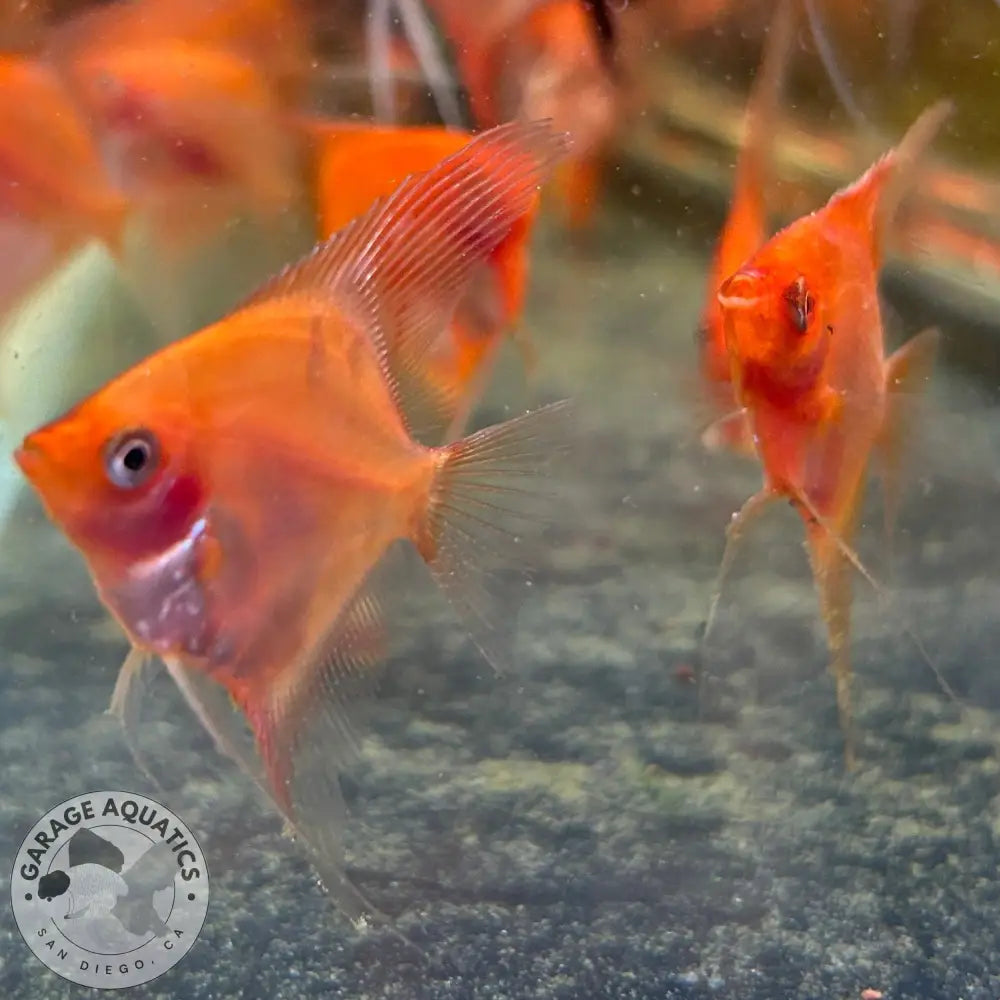
Different lines have the same basic care needs. Red lines like our Red Devil angelfish benefit from color-enhancing food. Read more in our guide to Red Devil angelfish.
Common Angelfish Health Problems
- Ich (white spots): Often caused by stress or a sudden temperature drop.
- Fin rot: A sign of poor water quality.
- Not eating: Test your water first. It is usually the cause.
Quarantine new fish for 2 to 4 weeks before adding them to your main tank.
Frequently Asked Questions
How long do angelfish live?
With good care, about 10 years.
Can I keep just one angelfish?
Yes. A single angelfish does well in a community tank.
How many angelfish should I buy?
Start with one or a group of at least four in a large tank. Groups of two or three can lead to bullying.
Are angelfish good for beginners?
Yes, if the tank is cycled, tall enough, and the tank mates are peaceful.
Buy Angelfish From Garage Aquatics
We are a San Diego, CA aquarium shop that ships live fish across the US. Browse our angelfish and see how we ship in our live fish shipping guide.
Share:
Ranchu Goldfish Care Guide: Tank, Food, and Water
Flowerhorn Cichlid Care Guide: Tank, Food, and Setup